

Winning the Bluetooth® Low Energy Opportunity


Bluetooth Low Energy (BLE) is revolutionizing the Internet of Things (IoT) by providing real-time visibility, smarter operations, and sustainability. Tageos combines RFID expertise, BLE innovation, and a global scale to help customers and partners unlock new retail, logistics, and industrial opportunities.
The Big Potential of Bluetooth Low Energy and RAIN RFID
The Internet of Things is entering a new phase characterized by scale, enhanced intelligence, greater sustainability, and seamless connectivity. At the heart of this evolution is Bluetooth technology. By 2028, it is expected that 600 million Bluetooth-enabled industrial devices will be shipped annually1. Bluetooth Smart Labels, in particular, are opening up new possibilities across industries for real-time visibility, data-driven decision-making, and resource efficiency. These connected labels consume extremely little power and are used for logistics, inventory tracking, and supply chain monitoring. It is estimated that 138 million units will be shipped annually by 2030, driven by a compound annual growth rate (CAGR) of 30.4% between 2025 and 20302. At Tageos, we believe the potential is even greater. A major project announced in fall of 2025 by a leading retail customer is expected to provide additional market momentum.
For companies already using RAIN RFID (UHF) or considering the next step in connected products, BLE represents a powerful complementary technology and a significant market opportunity. With our long-standing expertise in RFID innovation and global manufacturing excellence, Tageos is uniquely positioned to help customers and partners capitalize on these opportunities.
A More Productive and Sustainable World
In recent years, Bluetooth technology has become a cornerstone of modern connectivity. Its significance extends far beyond consumer devices. In retail, logistics, and industrial settings, BLE provides real-time insights into operational processes, enabling a more productive world.
Through continuous wireless communication, BLE allows companies to track assets, monitor workflows, and optimize processes with unparalleled accuracy. Furthermore, real-time location systems (RTLS) based on BLE can reduce inefficiencies by ensuring that goods, returnable transport items (RTI), tools, and equipment are always visible and accessible. This results in faster operations, reduced downtime, and improved workforce productivity.
At the same time, Bluetooth plays a crucial role in creating a more sustainable world. By enabling granular visibility into supply chains, BLE technology helps reduce waste, improve inventory accuracy, and minimize overproduction. Sensor-enabled BLE tags can monitor environmental conditions, such as temperature and humidity, ensuring that sensitive goods, like food or pharmaceuticals, are transported and stored under optimal conditions. Thus, spoilage and waste are reduced.

Additionally, BLE’s low power consumption supports energy-efficient applications, especially when combined with emerging battery-free or energy-harvesting technologies. These features align with global sustainability goals, enabling companies to reduce their carbon footprint while improving operational performance.
The Powerful Combination
Instead of replacing existing technologies, BLE is most impactful when used with RAIN RFID (UHF). Each technology has its own strengths, and together, they form a comprehensive, scalable, robust IoT infrastructure. Key benefits of BLE include extended range and real-time location visibility, and battery-powered BLE tags can transmit signals over distances of up to 100 meters, enabling the continuous tracking of assets in large facilities. In contrast, RAIN RFID excels at high-speed and precise identification of large amounts of items. For example, this can be done using handheld readers or when passing through specific checkpoints, such as loading docks. This makes BLE ideal for tracking movements in larger spaces, while RAIN RFID captures transaction events within a range of up to 10 meters from the reader.
The cost structure and primary applications differ in this regard. For example, active BLE tags are more expensive due to their built-in batteries and electronics. They are best suited for higher-value transport units, such as pallets, containers, boxes, and reusable transport racks filled with goods. On the other hand, the extremely cost-effective, battery-free RAIN RFID tags are ideal for tagging individual items on a large scale, whether in retail apparel, logistics, or manufacturing. The variety of data collection and tracking capabilities further underscore the advantages of using BLE. Many BLE tags have sensors that capture environmental data, such as temperature. This enables condition monitoring throughout a product’s entire lifecycle, which is something that typical passive RAIN RFID tags alone cannot offer.
Another important advantage to consider is the flexibility of the infrastructure. BLE signals can be received by widely used devices, such as smartphones, tablets, and Bluetooth gateways, reducing the need for specialized infrastructure. This allows for rapid deployment and easy integration into existing digital ecosystems.
Finally, the robustness and accuracy of the system improve when both technologies are used together. Although RFID performance can be impacted by challenging materials like liquids or metals, active BLE provides more reliable connectivity in these environments. A hybrid approach ensures redundancy and higher data reliability across diverse use cases. In short, BLE and RAIN RFID are complementary building blocks of the next-generation IoT, not competing technologies.
Harnessing the BLE Opportunity Through Innovation and Partnerships
Recognizing the transformative potential of BLE, Tageos has made strategic investments to expand its capabilities beyond traditional RFID into the broader wireless IoT ecosystem.
A focal point of these efforts is the company’s Innovation Center of Excellence (ICoE), a dedicated R&D lab which opened its doors in April 2025, and is focused on accelerating innovation, collaboration, and product development. The ICoE united experts in antenna design, materials science, electronics integration, customization and industrialization to develop next-generation inlays that address the evolving needs of customers and partners.
Tageos is supported in this endeavor by leading companies in the industry. Through collaborations with innovators in BLE technology, including Wiliot, Trackonomy, and InPlay, the company is helping shape the future of connected products.
For example, Tageos is working with Wiliot to develop battery-free BLE sensor inlays that enable ambient IoT applications combining sustainability and intelligence. These products harvest energy from the environment, eliminating the need for batteries while providing valuable data insights.
Through its partnerships with Trackonomy and InPlay, Tageos offers next-generation, battery-powered BLE inlays designed specifically for high-performance tracking and real-time visibility in logistics and supply chain environments.
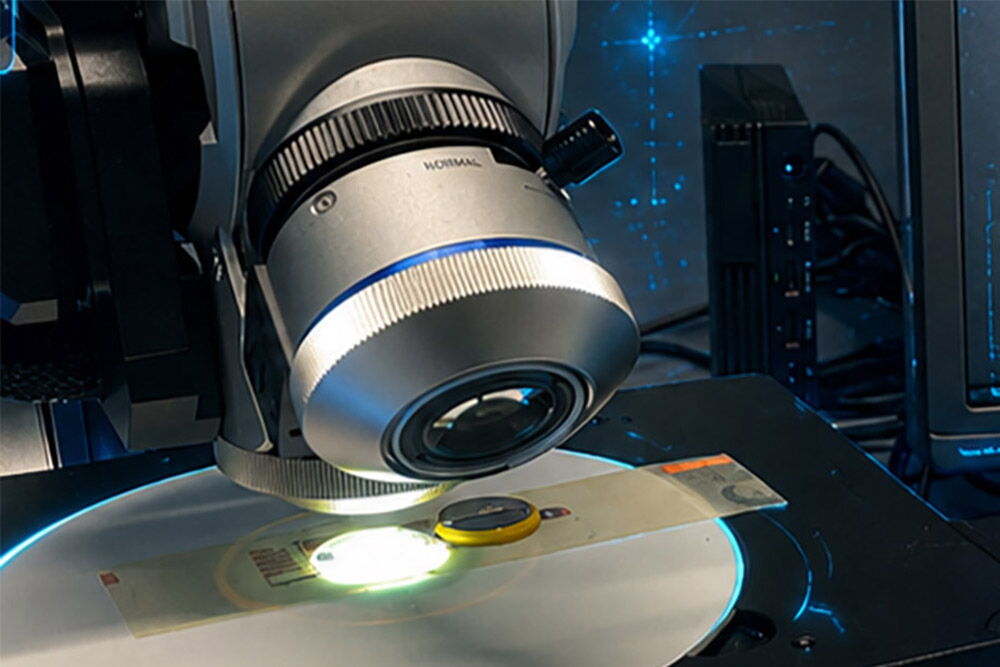
Thanks to its partnerships, as well as its close collaboration with label converters, combined with Tageos’ extensive expertise in high-volume inlay manufacturing, the company is able to bridge the gap between innovation and widespread adoption.
Tageos focuses on its role as an inlay manufacturer, dedicating itself 100% to promoting and supporting its strong partner ecosystem.
Developing fit-for-purpose products is the absolute priority. Whether they are ultra-thin, flexible BLE inlays for smart labels or robust designs for industrial tracking, Tageos ensures seamless integration and optimal performance.
From Innovation to Industrial Scale
One of the key challenges of adopting the IoT is transitioning from pilot projects to large-scale implementations. This is precisely where Tageos’ unique strengths come into play.
With an annual production capacity of over 12 billion inlays and a global manufacturing footprint spanning three continents, Tageos offers unmatched scalability, availability, and reliability. Its advanced roll-to-roll manufacturing processes ensure consistently high quality, yield, and cost efficiency – critical factors for large-volume deployments.
The combination of industrial advantages and backbones, plus the Innovation Center of Excellence, delivers a powerful value proposition:
- Rapid innovation and prototyping
- Seamless transition to mass production thanks to proven manufacturing expertise
- Global supply chain resilience and product availability
- Cost efficiency optimized for large-scale deployment and adoption
This integrated approach makes Tageos the ideal partner for companies looking to deploy BLE tags at scale without compromising performance, quality, or cost.
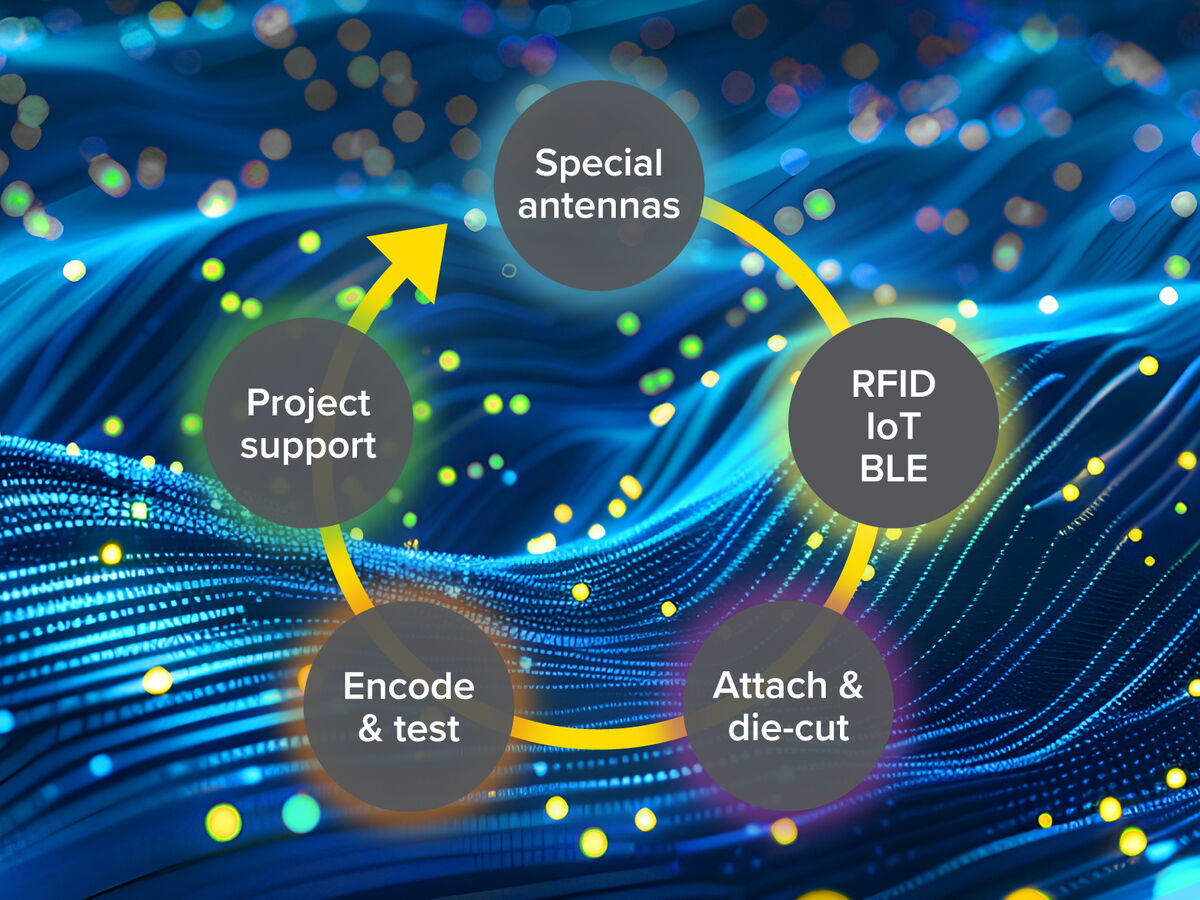
Stronger Together
BLE is opening new frontiers in productivity, sustainability, and connectivity. Tageos is at the forefront of this transformation, actively empowering customers and partners to turn innovation into reality.
Companies seeking to unlock the full potential of the IoT can rely on Tageos for a best-in-class pathway to scalable, intelligent, and sustainable inlay and tag deployment.
The BLE opportunity is here. With the right partner, it can be realized efficiently, effectively, and at scale. Contact our sales team to learn how Tageos can support your needs.
About Wiliot
Wiliot, a pioneer of Ambient IoT, powers your supply chain with continuous, scan-free visibility into item location and condition. The Wiliot Intelligence Platform processes signals from battery-free Bluetooth sensors (IoT Pixels) in the Wiliot Cloud using purpose-built AI and ML models. This enables real-time automated condition monitoring, inventory intelligence, and workflow optimization. Whether you have AI in place or are just starting, Wiliot delivers continuous, AI-ready data that drives ROI today and scales into advanced AI tomorrow.

About Trackonomy and InPlay
Trackonomy is pioneering the next generation of Enterprise Resource Planning (ERP) for logistics and supply chain management, bringing real-time intelligence and automation from the shop floor to the top floor. Its transformative network of interconnected assets turns inanimate objects into smart, self-optimizing systems that improve efficiency, security, and operational control. Serving major global enterprises across logistics, manufacturing, and supply chain industries, Trackonomy’s solutions optimize workflows, correct inefficiencies at a micro level, and provide full end-to-end visibility and condition monitoring to enhance business performance.
InPlay Inc., a wholly owned subsidiary of Trackonomy Systems, is a fabless semiconductor company specializing in ultra-low-power wireless connectivity solutions. Its flagship NanoBeacon SoC platform enables developers to build smart labels, active RFID, and wireless sensor solutions without firmware development, reducing cost and accelerating time-to-market. Headquartered in Irvine, California, InPlay is part of Trackonomy's global innovation ecosystem, advancing intelligent, power-optimized connectivity that bridges the physical and digital worlds.

1ABI Research blog post, 2024
2Bluetooth® Special Interest Group and ABI Research Bluetooth® Market Dashboard